Hochvolthaus 2.0:
Transformation Through Dialogue
Redefining the student experience by connecting heritage with artificial intelligence. A legacy of high voltage, reimagined for the digital age.
A Legacy of High Voltage
The Hochvolthaus is an impressive architectural masterpiece located at the corner of Theresienstrasse and Luisenstrasse. Constructed between 1957 and 1963 by renowned architects Werner Eichberg and Franz Hart, the building was originally designed to house high-voltage experiments.
To withstand extreme electrical loads, the architects utilized a unique construction method featuring solid brick walls instead of conductive steel. It stands today as a significant example of Munich's second school of architecture.
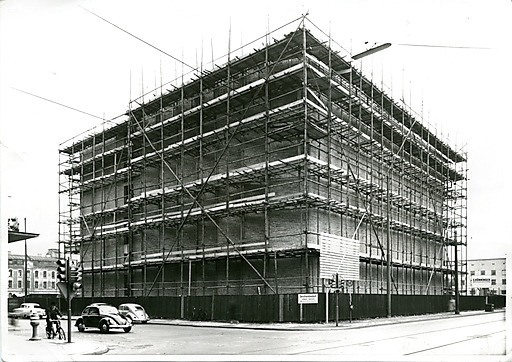
Archival Photograph · 1960
During construction
Hochvolthaus 2.0: A Public Campus Hub
Reimagining a historic structure as a vibrant public building for TUM community.
Architectural Strategy
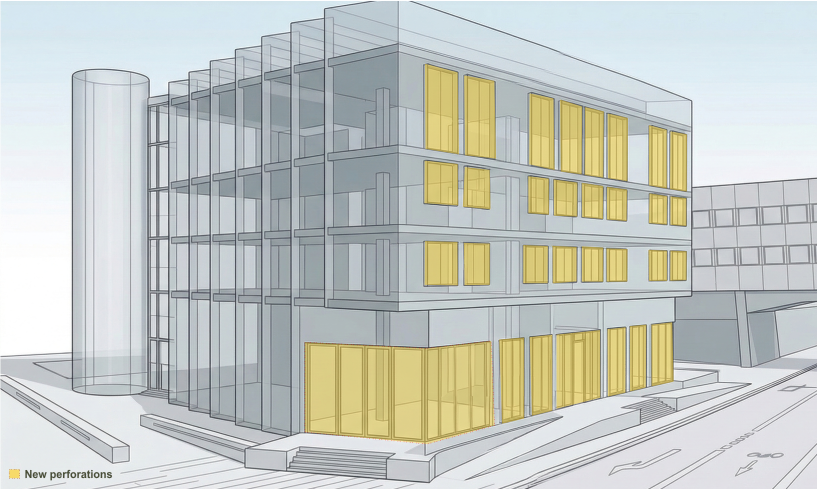
Retaining the strong identity while introducing "punching and perforation" to create new entries and skylights.
New Spaces
Addiional space levels with grid structure and clean flat slabs featuring exihbition space, event spaces, studying and activity areas.
Integration
Breaking the isolation of the original solid walls to bring the building into the main pedestrian flow.
Architectural Concept
Architectural Transformation – Hybrid Student Activity Center Merging Movement and Stillness
Concept
The building has been transformed into a Hybrid Student Activity Center that combines focused study environments with spaces for physical activity. By integrating sports facilities and movement-based programs directly with learning and social spaces, the design promotes physical movement as an active contributor to concentration, well-being, and academic performance.
Punching & perforation: new entries, skylights, and circulation.
Public campus hub: café, workshops, event spaces, and team areas.
Light + flow: connect the building to the pedestrian network.
Functions: Beyond improving concentration, the concept also aims to increase spatial diversity and extend the daily use of the building.
By combining different functions within one structure, the building becomes a more dynamic and flexible environment that can support a variety of student needs throughout the day.
Benefits: The architectural concept redefines the learning environment as a holistic system in which academic work, physical activity, and social interaction are interconnected.
Through this integration, the building supports a healthier and more balanced approach to student life while maintaining its role as an academic facility.



Hybrid Student Activity Center
Merging Movement and Stillness
The building has been transformed into a Hybrid Student Activity Center that blends focused study environments with physical activity zones.
Instead of separating quiet and active functions, the design introduces a continuous spatial system where movement and stillness coexist. Spaces for climbing, indoor badminton, and social gathering are integrated with traditional study areas to encourage mental refreshment and sustained focus.
This spatial diversity supports longer, healthier study sessions and redefines learning as both a physical and intellectual process.
New Spaces - Driven by Demand
* Demand insights inspired by student behavior study in WS24 "Outsider" Thesis, TUM
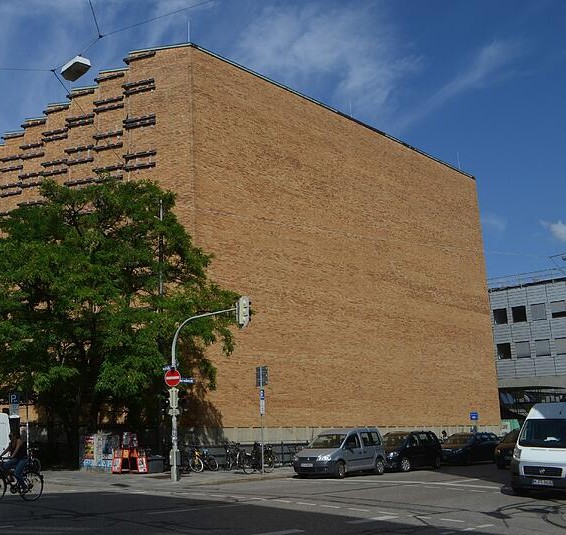
Dull and Uninviting Atmosphere
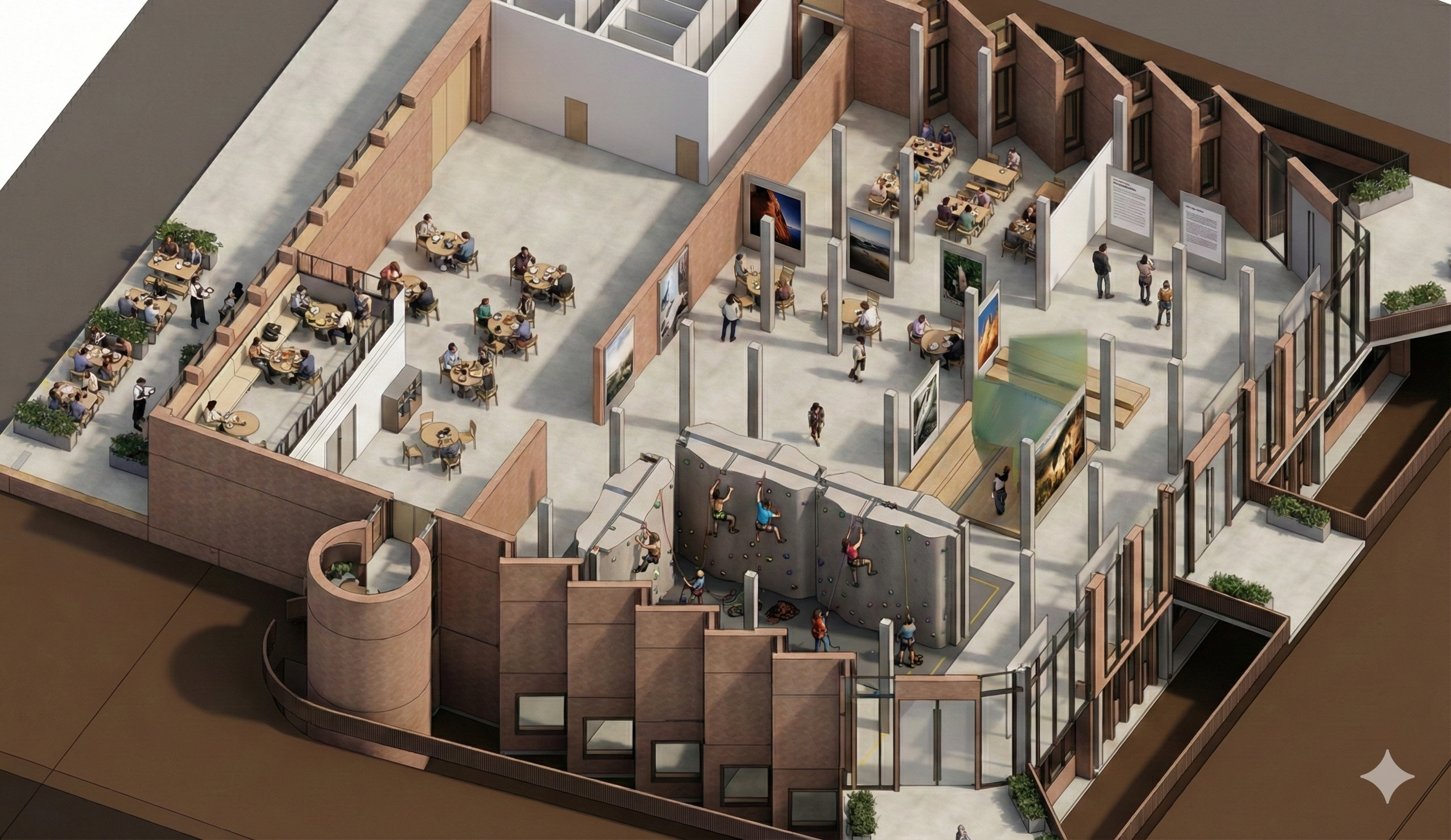
Café, Exhibition Space, Climbing Wall, Leisure Activity Center

Lack of Self Study Desks
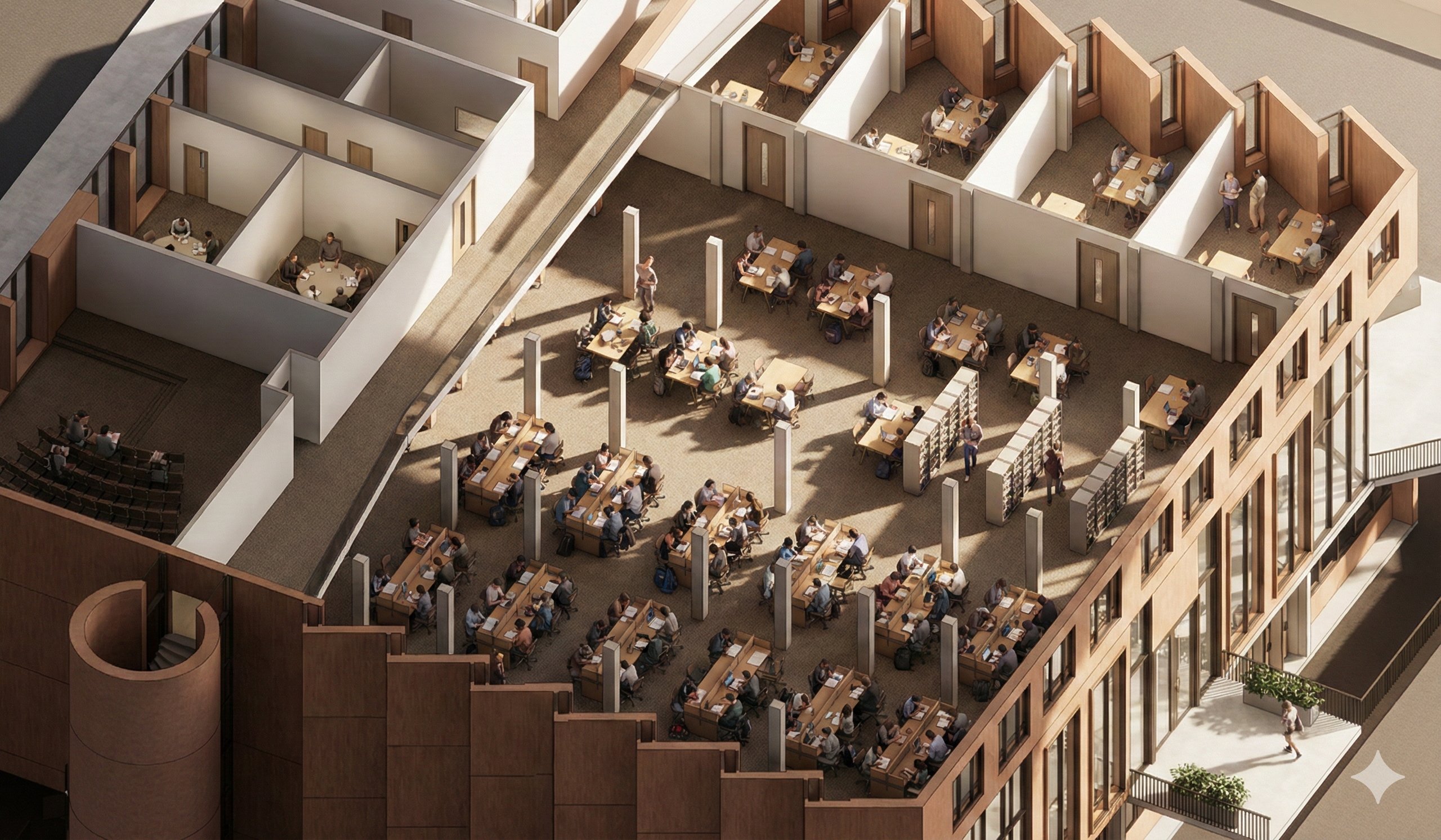
New Self / Group Study Area

Find a Spot for Team Work
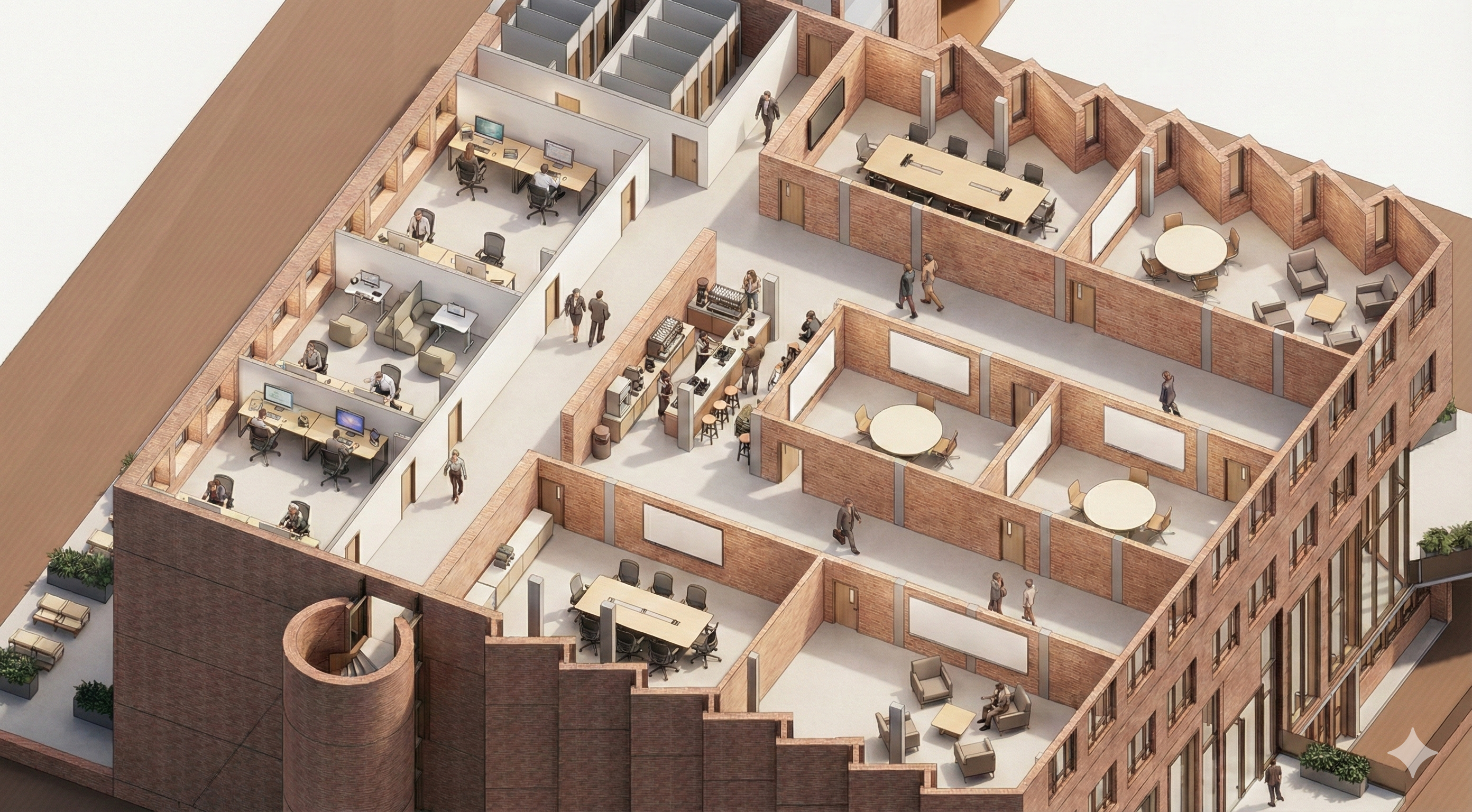
New Group Discussion Area

Lack of Indoor Activity Space
limits Balanced Student Life
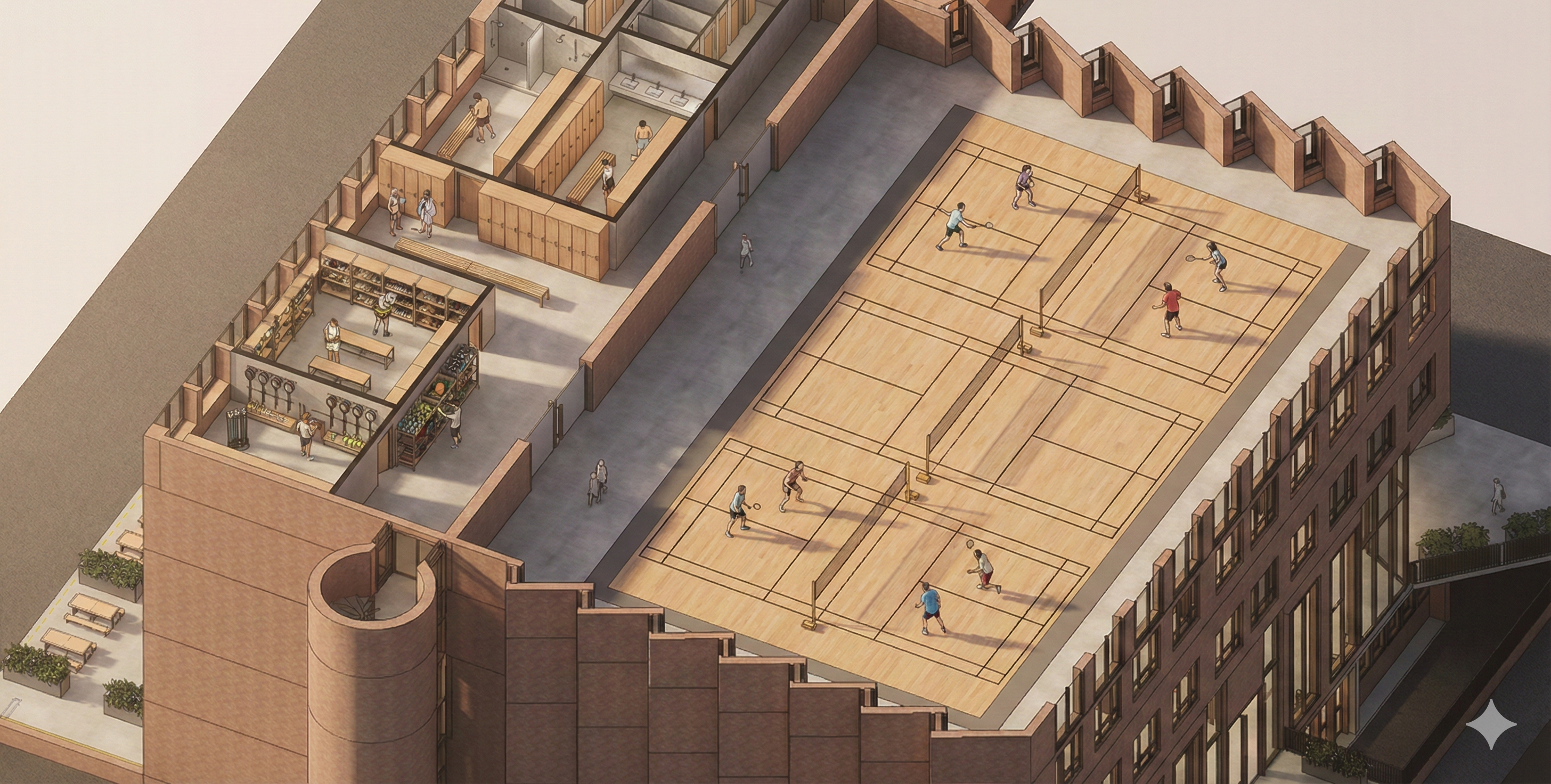
Badminton Court with Changing and Equipment rooms
Additional Visualizations
Interior perspectives that further illustrate the spatial atmosphere, adaptability, and experiential quality of the transformed Hochvolthaus.
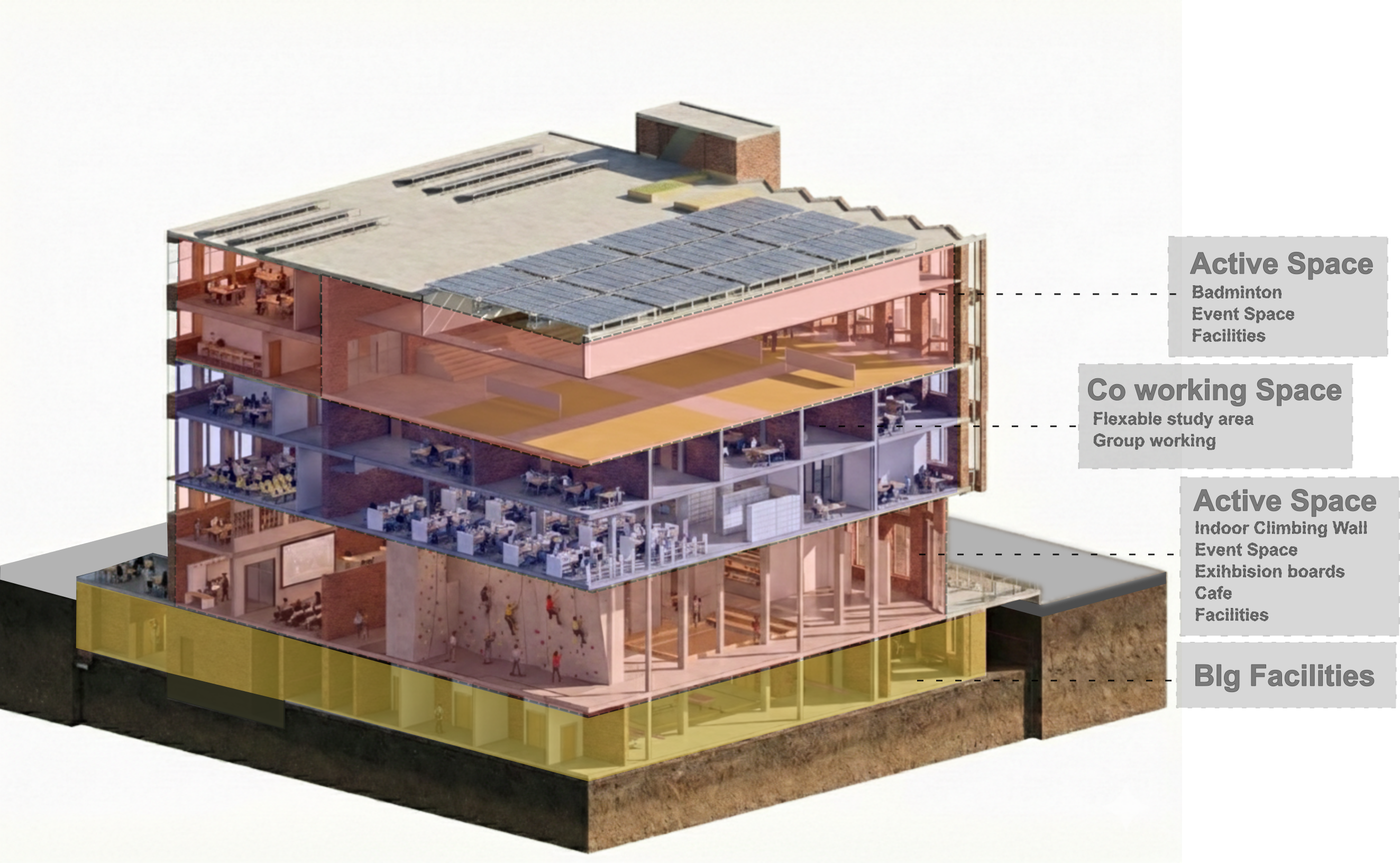
Interior Sectional Zoning and Spatial Arrangement
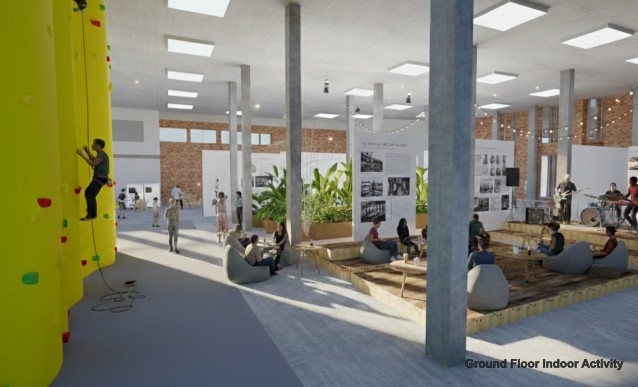
Ground Floor Indoor Activity
Active communal atmosphere with informal interaction and spatial openness.
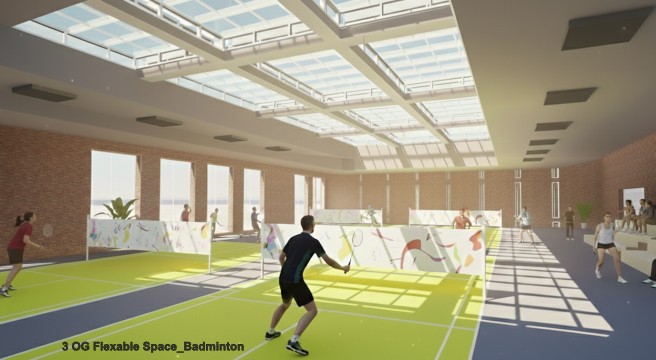
3OG Flexible Space – Badminton
A flexible activity zone emphasizing movement, recreation, and shared use.
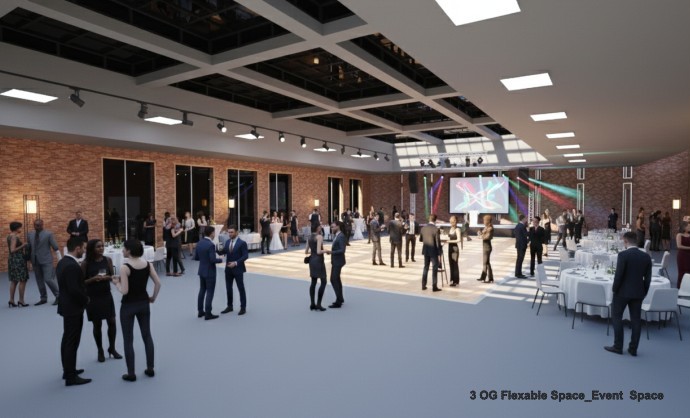
3OG Flexible Space – Event
The same spatial system adapted for larger gatherings, events, and community use.
Integration
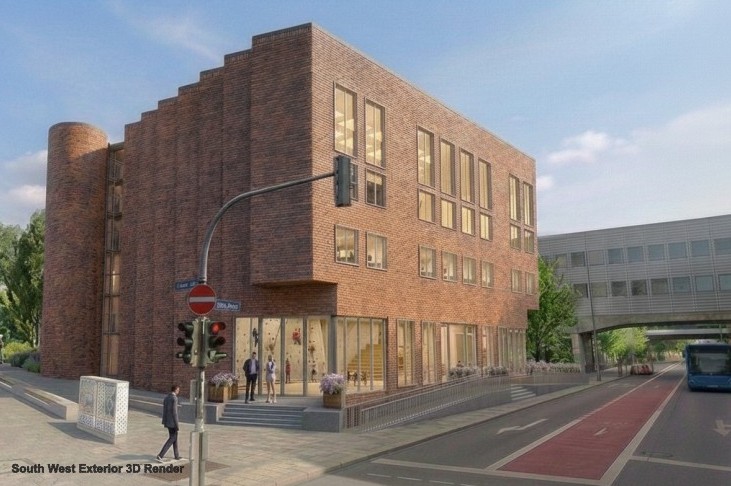
Integration
The redesigned Hochvolthaus reconnects with the surrounding campus through new entrances, circulation paths, perforated facades, and spatial links that integrate the building into the pedestrian network and TUM campus.
Integration with Surroundings
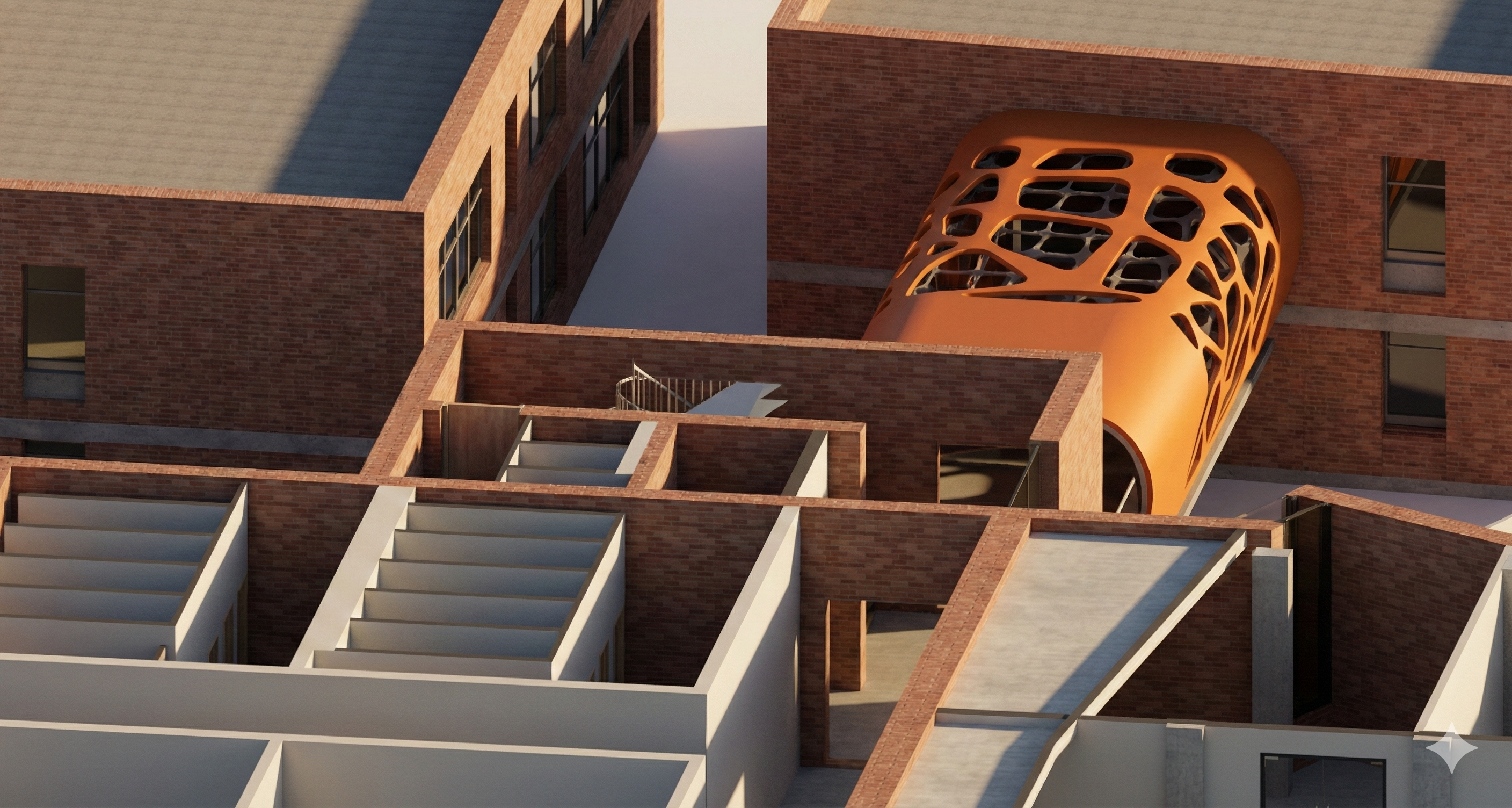
Skybridge Connection
A new skybridge on level 1 connects to the North Building, reducing isolation and improving inter-building circulation.
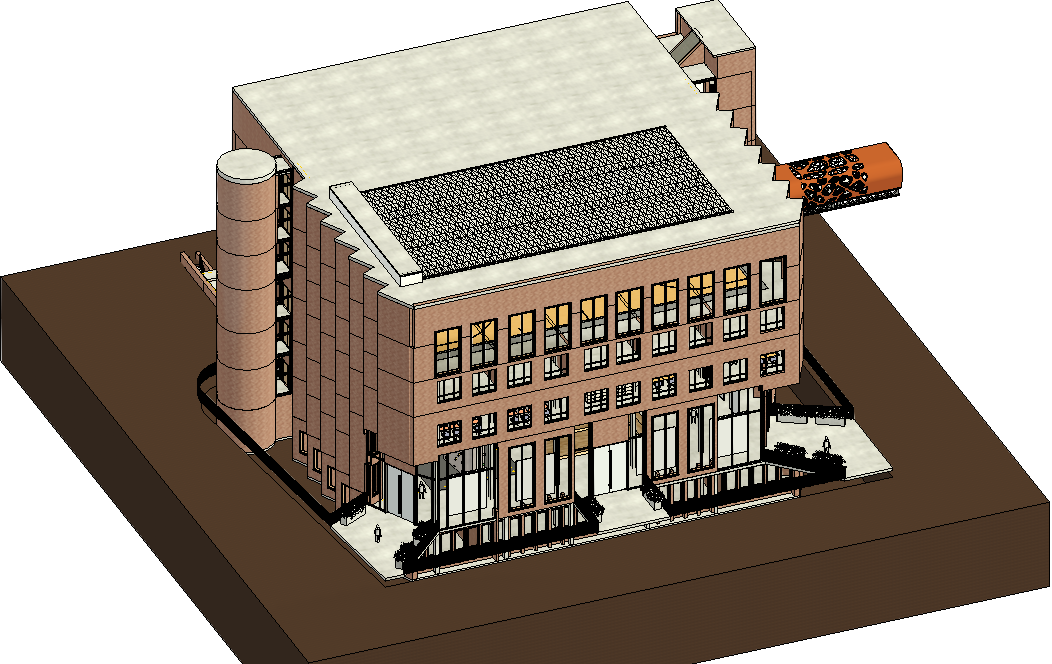
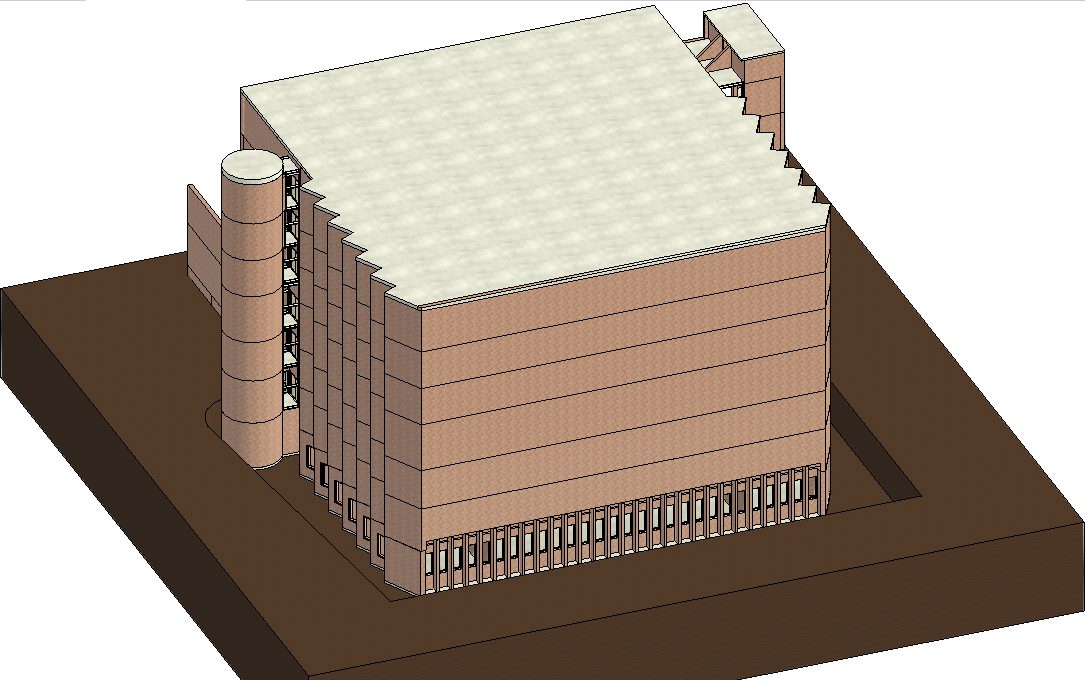
Transparent South Facade
The new glass curtain wall on the south side improves transparency and visibility, making the building more inviting and easier to access through an added entrance.
SpaceTalk: Your Building, Your Companion
Static maps are history. It's time to talk to your building.
The Concept
An LLM-based conversational agent that allows you to interact with the building as if it were a helpful assistant.
How It Works
Powered by RAG (Retrieval Augmented Generation), connecting LLMs to deep IFC databases and 3DCityDB for urban context.